
What Is Looked At in a Fuel Station Valuation?
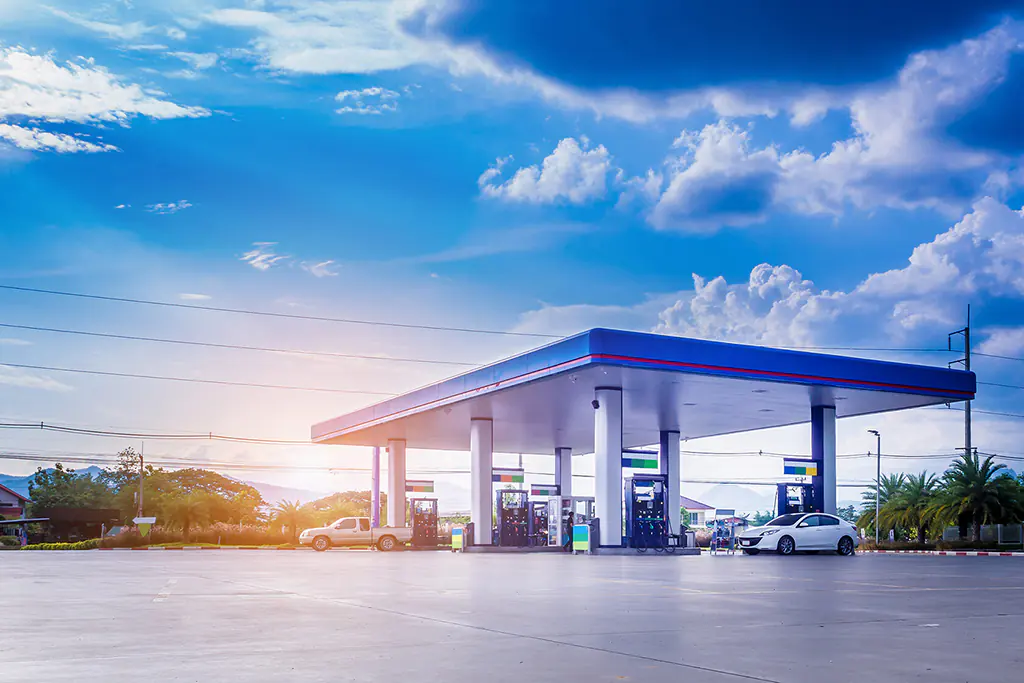
Fuel and LPG stations are valued by considering together their location, sales volume, the licences they hold and the condition of the structure and equipment. Value rests on the income the station generates, in addition to the land and the building.
Because the road route and vehicle traffic are the main determinants of these facilities' income, location analysis is at the centre of the valuation.
Stations are both real estate and a regulated commercial activity, so a valuation examines separately, besides the land and the building, factors such as the licence, the dealership and the equipment. Below is a summary of how these factors are handled.
Key Takeaways
- The road route and vehicle traffic are the main determinants of income.
- Licence and permit status is always examined in the valuation.
- Sales volume and income data are used in the income approach.
- The condition of the storage tanks and equipment is assessed separately.
Why do location and traffic matter so much?
The road the station is on, the vehicle traffic on that road, proximity to junctions and city entrances, and ease of entry and exit directly affect sales volume. Competing stations in the immediate surroundings are also included in the analysis.
Even on the same road, positions are advantageous where the driver can see the station in advance and slow down safely, where entry and exit are easy, and where the direction is right (for example, whether it is on the side heading into the city or out of it). If a road is going to change in the future, a new ring road or a junction redesign can shift traffic to another route, so planned road works are also researched. For urban stations, the density of housing and workplaces around comes to the fore, while for intercity stations it is through traffic.
Licence and permit status
Fuel and LPG stations operate subject to specific licences and permits. The validity of the licence, the dealership agreement and the compliance of the building permit directly affect value; these documents are examined during the valuation.
Details such as who holds the licence, whether it can be transferred and its term may vary according to the relevant legislation and the conditions of the authority. A station without a licence, or one that does not meet the licence conditions, will not be worth the same as an operating station with the same physical structure. It is therefore critical to the reliability of the valuation that documents are provided up to date and in full.
Income and sales data
Sales volumes and operating income for recent years are used in the income approach. The term and conditions of the dealership agreement are also important for the sustainability of future income.
In fuel retail, income is not only about litres sold; ancillary income such as a convenience store, a car wash and a cafe also affects the station's overall performance. The expert examines sales data by product type (petrol, diesel, LPG) and by year. The margin and payment terms between the dealer and the distributor company are also factors that affect net income. If the dealership agreement is about to end or the distributor company may change, future income assumptions are built cautiously accordingly.
Structure, tanks and equipment
The station building, the storage tanks, the pumps and other equipment, and their safety requirements, are also assessed through the cost approach. Compliance with environmental and safety legislation is checked separately for the continuity of the business.
The age of the underground tanks, maintenance and test records, and leakage and environmental risks are important for value. If tanks and equipment need to be replaced, this cost may be an item to deduct from the value. Items such as the canopy, the ground surfacing, fire safety systems and the number of pumps are also part of the physical assessment.
What should the buyer and the seller pay attention to in a sale?
For the seller, arranging in advance whether the licence and dealership can be transferred, compliance with environmental and permit requirements, and the tank records makes the sale easier. For the buyer, it is important to verify the sales figures with independent sources, to ask whether there is any environmental risk in the underground tanks, and to find out the terms of the new agreement to be made with the distributor company.
Documents that the station owner can prepare before the valuation are: the current title deed and zoning status, the occupancy permit, copies of the licences and permits, the dealership agreement, the monthly sales breakdown for recent years and the tank and equipment maintenance records. Having these ready both shortens the review time and reduces the number of uncertain assumptions in the report.
In such transactions, it is not only the property price: the transfer of the business, stock, fixtures and employees also come up. The valuation report should state clearly which of these factors it covers, so the scope must be defined clearly at the request stage.
How do land value and business value differ?
A station plot has a value even without a fuel business. But where the business and the licence can be maintained, the total value generally rises above the land value. In the valuation report, the land and building value and the value tied to the business may be shown separately. This distinction is especially useful where the property and the business belong to different people and there is a dealership or lease relationship, because it reveals each party's share and risk.
Checklist for buying or valuing a station
Assess together the station licence and permits, the term and conditions of the dealership agreement, the sales volume history, the condition of the building and tanks, the environmental compliance documents, and the road route and competing stations. Whether the facility's land is owned or leased, and the lease term if it is leased, also directly affect value.
Try to verify sales volume data without relying on a single source: sales reports from the dealer, records and, if possible, confirmation from the distributor company. In areas with seasonal fluctuations, the distribution across the year also affects the income expectation.
Common mistakes in station valuation
Common mistakes include not taking into account the remaining term and conditions of the dealership agreement, not counting environmental obligations and tank renewal costs, and failing to foresee possible changes on the road route (a new road, a change of connection).
Another mistake is adding up the income of additional businesses next to the station, such as a convenience store, cafe or car wash, without separating it, and taking all of it for property value. The income from additional services is assessed separately. Whether they can be transferred, and under which contract they are run, should be clarified.
How is a station's value derived with the income approach?
For fuel stations, the main sources of income are the dealer margin earned on the quantity of fuel sold and income from additional services. The expert first examines sales volume over several years, then assesses whether this volume will continue in the future, based on road traffic, competing stations and contract conditions. Net income is found by deducting operating expenses from the income obtained, and this income is converted into a value using a rate of return accepted in the market.
With a hypothetical example: suppose two stations have the same sales volume, but one has a long remaining dealership term and the other a very short one. Because the continuation of income is uncertain under the short contract, the risk is assessed as higher and the value is generally lower. This shows the weight of the contract in a valuation.
The income approach is often supported by the cost approach: the replacement cost of the building and equipment, less an allowance for depreciation, is added to the value of the land. If the gap between the two approaches is large, the expert investigates the reason; for example, at a station with high income but old equipment, the renovation cost can pull the income value down. For this reason, station valuation considers documents, contracts and the technical condition on site together.
Frequently Asked Questions
Last updated:
This article is for general information only; consult a valuation expert about your specific situation. Regulations and practices may change over time.
Related Services
How We Can Help You


Keep Reading