
How Are Commercial Properties Such as Shops and Offices Valued?
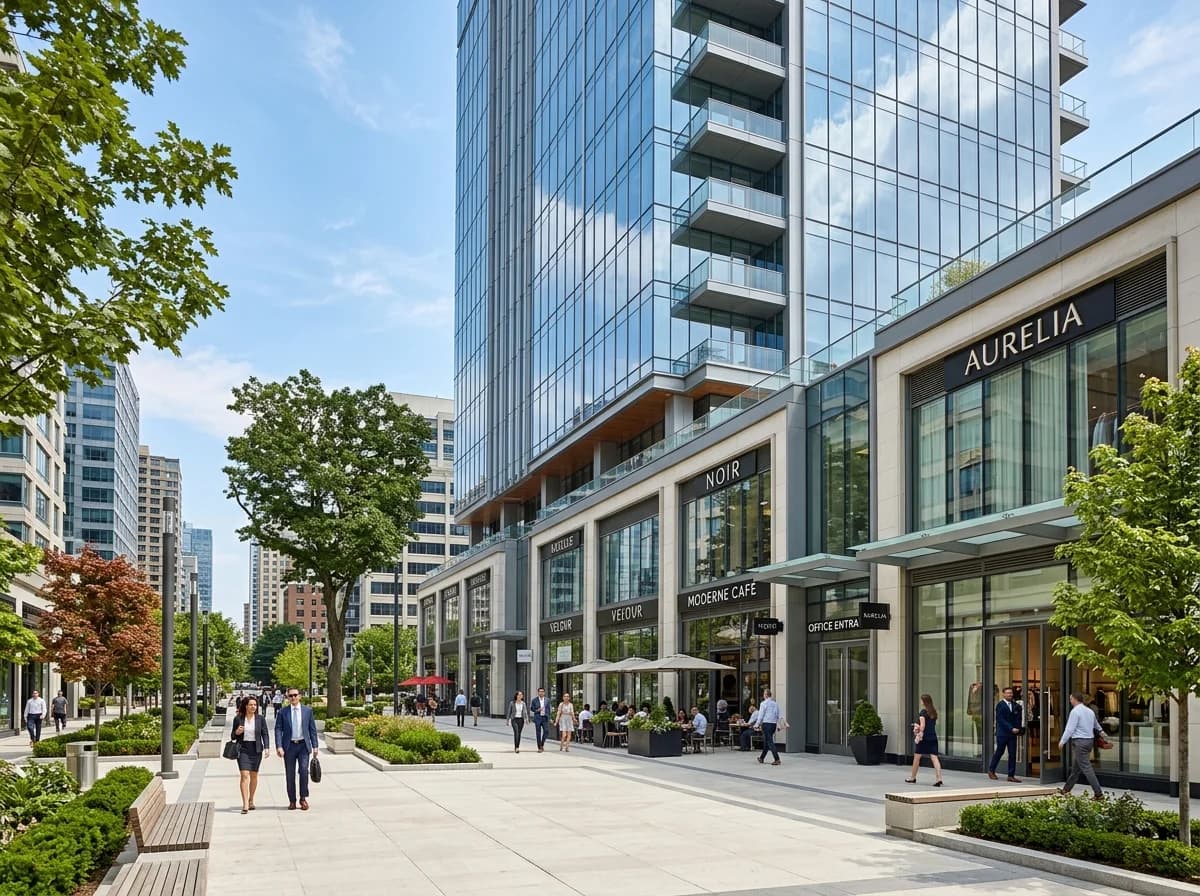
Commercial properties such as shops, offices and retail units are usually valued with the income approach in addition to market comparison: a value is calculated based on the rental income the property earns or could earn.
For commercial properties, factors such as the commercial potential of the location, frontage and traffic are far more decisive than they are for homes. The person buying a commercial property usually intends not to live there but to earn income from it, so value is linked less to the property's physical features than to the income it can produce.
In this article you can find, step by step, the methods used in the valuation, the difference between let and vacant properties, and the documents the expert looks at when preparing the report.
Key Takeaways
- Rental income (the income approach) is prominent in commercial valuation.
- The street, frontage and pedestrian and vehicle traffic affect value.
- For let properties, the lease and its term are important.
- Market comparison supports the income approach.
Why is location assessed differently for commercial property?
The value of a shop depends on the commercial vitality of the street it is on, pedestrian and vehicle traffic, the length of its shop-window frontage and the other businesses around it. Two shops in the same neighbourhood can be worth very different amounts depending on whether they are on the main street or on a side street.
For housing, neighbourhood and transport come to the fore. In commerce, what matters is that customers can see the property and reach it easily. A corner position, having two frontages, pavement width, parking and nearby attractions (school, hospital, market, public transport stop) are examined from this angle. There is also a clear difference between a ground-floor shop and a unit on the basement or mezzanine floor; as ease of access falls, commercial value generally falls.
The valuation expert therefore looks not only at the address but also at how the street where the property is located is used during the day. The hours at which foot traffic peaks, the type of businesses around and the number of vacant shops give an idea of the commercial health of the area.
Which valuation approaches are used?
In international valuation standards there are three basic approaches: the market (comparison) approach, the income approach and the cost approach. Which one carries more weight in commercial real estate depends on the type of property and on the availability of market data. For shops and offices that are let or can be let, the income approach is generally to the fore, and comparable sales are used to test the result.
The cost approach comes into play mostly for newly built, unique or hard-to-compare properties. The expert compares the results reached with more than one approach and explains in the report why greater weight was given to one of them. A large gap between the approaches shows that there is a point in the data or the assumptions that needs re-checking.
How is the income approach applied?
The property's annual rental income is determined, allowances for vacancy and expenses are deducted, and the resulting net income is converted into a value using a rate of return accepted in the market. This approach reflects, from the investor's viewpoint, how much income the property will earn.
A hypothetical example: for a shop with annual net income of 600,000 TL, if a rate of 6 percent is regarded as reasonable in the market, simple capitalisation gives a value of 600,000 / 0.06 = 10,000,000 TL. If the rate rises to 7 percent, the value for the same income falls to about 8,570,000 TL. The figures are made up only to show the logic; in a real study, the income, expenses and rate are derived from market data. As the example shows, a small difference in the rate of return changes the value significantly, so the comparables the rate is based on should be stated clearly in the report.
The expert also weighs how sustainable the rental income is: are rents in the area rising, are there similar units standing vacant, and what are the rent increase terms? These questions also influence the choice of the rate of return.
What is looked at for let properties?
The current rent, the lease term and increase conditions, and the reliability of the tenant affect value. If the current rent is below or above the market rent, this difference is shown separately in the report.
A tenant with a long-term lease who pays regularly makes the income more predictable, which supports the value in the eyes of the investor. By contrast, a tenant whose lease will end soon or who is late with payments increases the risk. If the current rent is well above the market, it is also taken into account that the excess may not continue when the lease ends.
Special factors for offices and retail units
For offices, building quality, parking, transport and the surrounding business centres are additional factors; for retail units, they are the shop window, ceiling height and customer access. For units inside a shopping centre, the centre's visitor potential and its rental terms determine value.
In office buildings, the condition of common areas, the lift, the management and service charge arrangements, the management plan and the condominium ownership provisions are also examined. Whether an office floor can be divided or let to more than one tenant affects the flexibility of use of the property and therefore its value.
How should buyers and investors read the value?
The value in the report is the market value on a specific date. It is not a guaranteed sale price. For an investor, alongside the value, it is more instructive to look at the rent, the rate of return and the list of comparables the report is based on. How much of the rental income is contractual, and how much is assumption? Was the rate of return derived from similar transactions in the area? The answers to these questions show how solid the value is.
In a purchase decision, besides the value, you also need to consider the property's operating costs, tax and service charge burden, possible renovation needs and the time it will take to find a tenant. The valuation includes some of these factors, but personal financing conditions and investment goals are not included in the report.
Which documents should be prepared for the valuation?
Usually a current title deed record, the occupancy permit (iskân), the approved architectural project if available, lease agreements and recent rent payment information are requested. The workplace opening and operating licence required for the business activity may also be checked. Missing documents do not prevent the valuation, but they may lead to more assumptions and limitations in the report.
If the property's actual use does not match the type of use in the documents (for example, a property registered as residential being used as a workplace), this is noted separately in the report, because it can create risk from both a legal standpoint and the standpoint of buyers and banks.
Checklist for buying a commercial property
Examine the current lease and its term, compare the rent with the market rent, assess the street and frontage position on site, find out the building's common expenses and management situation, and check the title deed and occupancy permit documents. The tenant's payment history is also important for the reliability of the income.
Make sure that the intended use of the commercial property is consistent with the use provided for in the occupancy permit and the zoning plan. Running a commercial business in a place that received its occupancy permit as residential can cause problems later. Whether the licences and permits needed for the tenant's activity can be obtained also affects the value and the ability to find a tenant.
Common mistakes in commercial valuation
Common mistakes include looking only at the current rent and ignoring the market rent, not taking vacancy periods and expenses into account, and assessing the commercial potential of the location superficially. These mistakes lead to an unrealistically high yield expectation.
Another mistake is overlooking the nature of the lease. A contract with a long-term, reliable tenant supports the value, while a short-term or terminable contract creates income uncertainty. You should also look at how the rent increase terms are set out in the contract.
What do the rent multiple and the rate of return tell you?
For commercial properties, buyers often interpret the price through the rent multiple: this ratio, found by dividing the sale price by the annual rent, shows approximately in how many years the investment pays for itself through rent. The rate of return is the inverse of this, that is, the ratio of the annual rent to the sale price. Both quickly show how attractive the property is as an income-producing investment.
A hypothetical example: if a shop with an annual rent of 100 units is offered for sale at 1,250 units, the rent multiple is 12.5 and the gross yield is 8 percent. If similar shops in the same area trade at a lower multiple or a higher yield, the conclusion may be that the price is high or the rent is low. These figures are fictitious; actual market ratios differ by area, period and property.
An expert does not use this ratio on its own in a valuation. They take the rate of return derived from transactions completed in the market, adjust it for the property's risk, and use it in the income approach. Tenant reliability, the lease term, the future of the location and the structural condition of the property push the rate up or down. That is why even two similar shops can be worth different amounts.
Frequently Asked Questions
Last updated:
This article is for general information only; consult a valuation expert about your specific situation. Regulations and practices may change over time.
Related Services
How We Can Help You


Keep Reading